Product Description
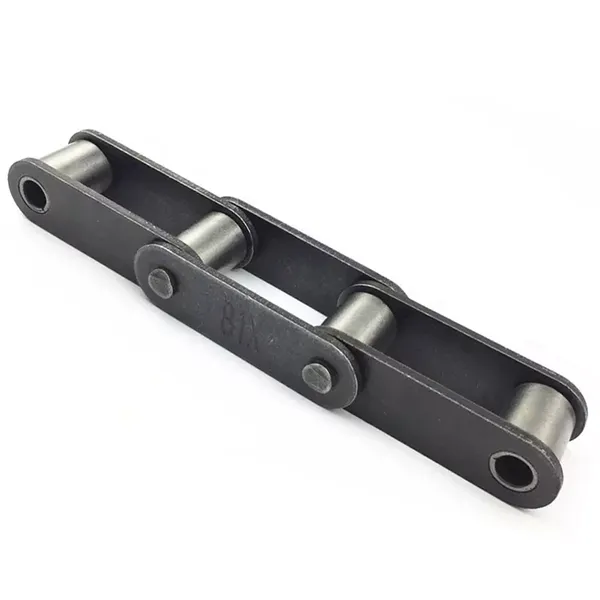
CZPT rollers enhance rotation on the bushing while reducing impact loads on the sprocket tooth during operation.
All components are heat treated to achieve maximum strength. All components are heat treated to achieve maximum strength.
Pre-loaded during the manufacturing process to minimize initial elongation.
Hot dipped lubrication ensures 100% lubrication of all chain components to extend wear life and reduce maintenance costs.
| ISO NO. |
ANSI NO. |
PITCH | ROLLER LINK WIDTH |
ROLLER DIA |
PIN | PLATE | MIN. TENSILE STRENGTH |
AVG. TENSILE STRENGTH |
MAX. ALLOWABLE LOAD |
|||
| P | W | D | d | L | Lc | H | T | |||||
| mm | mm | mm | mm | mm | mm | mm | mm | kgf | kgf | kgf | ||
| C208A | C2040 | 25.40 | 7.85 | 7.95 | 3.98 | 17.80 | 21.00 | 12.00 | 1.50 | 1,420 | 1,950 | 280 |
| C208AL | C2042 | 25.40 | 7.85 | 15.88 | 3.98 | 17.80 | 21.00 | 12.00 | 1.50 | 1,420 | 1,950 | 280 |
| C210A | C2050 | 31.75 | 9.40 | 10.16 | 5.09 | 21.80 | 25.00 | 15.00 | 2.00 | 2,220 | 3,100 | 450 |
| C210AL | C2052 | 31.75 | 9.40 | 19.05 | 5.09 | 21.80 | 25.00 | 24.10 | 2.00 | 2,220 | 3,100 | 450 |
| C212 | C2060 | 38.10 | 12.58 | 11.91 | 5.96 | 26.90 | 31.00 | 30.10 | 2.35 | 3,190 | 4,200 | 640 |
| C212AL | C2062 | 38.10 | 12.58 | 22.23 | 5.96 | 26.90 | 31.00 | 36.20 | 2.35 | 3,190 | 4,200 | 640 |
| C216A | C2080 | 50.80 | 15.75 | 15.88 | 7.94 | 33.50 | 38.00 | 42.20 | 3.20 | 5,680 | 7,500 | 1,100 |
| C216AL | C2082 | 50.80 | 15.75 | 28.58 | 7.94 | 33.50 | 38.00 | 48.20 | 3.20 | 5,680 | 7,500 | 1,100 |
| C220A | C2100 | 63.50 | 18.90 | 19.05 | 9.54 | 41.10 | 47.00 | 54.30 | 4.00 | 8,870 | 12,100 | 1,900 |
| C220AL | C2102 | 63.50 | 18.90 | 39.67 | 9.54 | 41.10 | 47.00 | 60.30 | 4.00 | 8,870 | 12,100 | 1,900 |
| C224A | C2120 | 76.20 | 25.23 | 22.23 | 11.11 | 50.80 | 57.00 | 72.40 | 4.70 | 12,770 | 16,000 | 2,550 |
| C224AL | C2122 | 76.20 | 25.23 | 44.45 | 11.11 | 50.80 | 57.00 | 18.00 | 4.70 | 12,770 | 16,000 | 2,550 |
| Usage: | Transmission Chain, Conveyor Chain, Roller Chains |
|---|---|
| Material: | Alloy/Carbon Steel |
| Surface Treatment: | Polishing |
| Feature: | Heat Resistant |
| Chain Size: | 1"~3" |
| Structure: | Roller Chain |
| Samples: |
US$ 10/Meter
1 Meter(Min.Order) | |
|---|
| Customization: |
Available
| Customized Request |
|---|

How do you calculate the chain pull force in a conveyor chain system?
The chain pull force, also known as the chain tension, is an important parameter to determine in a conveyor chain system. It represents the force required to move the conveyed load along the conveyor. The calculation of chain pull force involves several factors:
1. Weight of the Load: Determine the weight of the load being conveyed. This includes the weight of the product, packaging materials, and any additional equipment or components carried by the conveyor.
2. Friction Coefficients: Identify the friction coefficients between the load and the conveyor components. This includes the friction between the product and the conveyor chain, as well as the friction between the product and the conveyor bed or guides. These coefficients are typically provided by the manufacturer or can be obtained through testing.
3. Incline or Decline Angle: Consider the angle at which the conveyor operates. If the conveyor has an incline or decline, the angle will affect the force required to move the load.
4. Acceleration and Deceleration: Account for any acceleration or deceleration requirements in the conveyor system. If the conveyor needs to start or stop abruptly or if there are changes in speed, these factors will impact the chain pull force.
Once these factors are determined, the chain pull force can be calculated using the following formula:
Chain Pull Force = (Weight of Load + Friction Force) × (1 + Incline or Decline Factor) × (1 + Acceleration or Deceleration Factor)
It’s important to note that the accuracy of the calculation depends on the accuracy of the input values. Therefore, it’s recommended to consult the conveyor manufacturer or an engineering professional to ensure precise calculations and proper sizing of the conveyor chain.
What are the future trends and advancements in conveyor chain technology?
The field of conveyor chain technology is constantly evolving, driven by the need for improved efficiency, productivity, and sustainability. Here are some of the future trends and advancements in conveyor chain technology:
1. Automation and robotics: The integration of conveyor chains with automation and robotics systems is a growing trend. This includes the use of advanced sensors, machine vision, and artificial intelligence to enable autonomous operation, precise positioning, and efficient material handling.
2. Smart and connected systems: Conveyor chains are becoming increasingly connected through the Internet of Things (IoT) technology. This allows for real-time monitoring, data collection, and analysis of various performance parameters such as chain wear, tension, temperature, and energy consumption. Smart systems can optimize maintenance schedules, detect potential failures, and improve overall system efficiency.
3. Lightweight and high-strength materials: The development of lightweight yet high-strength materials is an ongoing focus in conveyor chain technology. Advanced alloys, composites, and engineered plastics offer improved strength-to-weight ratios, reducing energy consumption and increasing the load capacity of conveyor systems.
4. Energy efficiency: Energy efficiency is a key consideration in conveyor chain design. Future advancements aim to minimize power consumption through the use of efficient drive systems, regenerative braking, and smart control algorithms that optimize speed and acceleration profiles. Energy recovery technologies, such as regenerative drives, can also capture and reuse energy during deceleration or braking.
5. Sustainability and environmental friendliness: Conveyor chain technology is moving towards more sustainable and environmentally friendly solutions. This includes the use of eco-friendly materials, improved lubrication techniques to minimize environmental impact, and the adoption of energy-efficient components and systems. Recycling and circular economy concepts are also gaining prominence in the design and manufacturing of conveyor chains.
6. Advanced wear monitoring and predictive maintenance: The future of conveyor chain technology involves advanced wear monitoring systems that can accurately predict the remaining useful life of chains and components. This enables proactive maintenance planning and reduces unplanned downtime. Predictive maintenance algorithms analyze data collected from sensors and provide timely alerts for chain replacement or repair.
These are just a few examples of the future trends and advancements in conveyor chain technology. As technology continues to advance, we can expect further innovations that enhance performance, efficiency, reliability, and sustainability in conveyor systems.
How do you calculate the required length of a conveyor chain?
Calculating the required length of a conveyor chain involves considering several factors related to the conveyor system and the specific application. Here’s a step-by-step guide:
- Determine the Conveyor Length: Measure the total length of the conveyor path, including any horizontal, inclined, or vertical sections.
- Account for Sprocket Centers: Identify the locations of the sprockets or drive units along the conveyor path. Measure the distance between each pair of adjacent sprockets.
- Calculate the Number of Links: Divide the total conveyor length by the pitch of the chain to determine the number of links required. The pitch is the distance between the center of two consecutive pins on the chain.
- Consider Tension Adjustment: Take into account any tension adjustment requirements based on the specific application. This may include allowances for tensioning devices or tension variations due to load fluctuations.
- Include End Connections: Consider the length of the end connections, such as master links or connecting pins, which are used to join the ends of the chain. Include their dimensions in the total chain length calculation.
- Add Safety Factors: Incorporate appropriate safety factors to ensure adequate chain length for proper tensioning and to accommodate any potential stretching or wear over time.
It’s important to note that the calculation of the required chain length is an estimation based on various factors and may require adjustments during the installation and tensioning process. Consulting the conveyor manufacturer’s guidelines or working with an experienced engineer can provide more precise calculations based on the specific conveyor system and application requirements.


editor by CX 2023-08-11