Product Description
Product Description
| Type of conveyor | Roller Conveyor, Belt Conveyor, Chain Conveyor |
| Advantage | Efficiency, Accuracy, Reliability, Economy, Flexibility |
| Application | Manufacturing, Retail, Warehousing, Logistics, Pharmaceutic, Food&Beverage etc. |
| Chain size | 44/51/63/83/103/140/150/175/295mm |
| Packaging | Foam, bubble wrap, carton, wooden box, pallet or customized packaging according to customer requirements |
| Payment Terms | 3/7, 5/5, 100% prepaid or based on negociation. |
| Drawing Format | JPEG,PDF,DWG,DXF,IGS,STEP,CAD |
| Certification | ISO9001, ISO14001, ISO45001 |
Introduction of Types:
1. Belt conveyor line
Belt conveying line is the most common kind of logistics conveying line, which is mainly composed of belt, driving device, support and accessories. Belt conveying line has the advantages of simple structure, stable operation, easy maintenance and low energy consumption, so it is widely used in various logistics places.
2. Roller conveyor line
Roller conveyor line is mainly composed of roller, driving device, support and accessories. Roller conveyor line has the advantages of strong carrying capacity, large conveying capacity, stable operation, etc., so it is suitable for conveying large items.
3. Chain conveyor line
Chain conveyor line is mainly composed of chain, sprocket, driving device, bracket and accessories. Chain conveying line has the advantages of strong conveying capacity, stable operation and strong bearing capacity, so it is suitable for conveying large items.
Explanation of Advantages:
1. Efficiency: The logistics conveying line can quickly convey and sort the goods according to the predetermined route, thus improving the logistics efficiency.
2. Accuracy: The high degree of automation of the logistics conveying line can accurately complete the task of sorting and conveying the goods, and reduce human error.
3. Reliability: The mechanical parts of the logistics conveying line are specially designed and manufactured to ensure long service life and stability.
4. Economy: The construction and maintenance cost of logistics conveying line is relatively low, which can save cost for enterprises.
5. Flexibility: the logistics conveying line can be adapted to different kinds and sizes of goods, and can be adjusted and optimized according to the actual needs.
Application of Fields:
1.In the manufacturing industry, conveyor lines are used to transport raw materials, semi-finished products and finished products from 1 place to another, realizing the automation and high efficiency of the production process.
2.In the retail industry, conveyor lines are used to transport goods from the warehouse to the shelves to improve the efficiency of replenishment and display.
3.In the warehousing industry, conveyor lines are used to automate the entire process of goods entering and leaving the warehouse, improving the efficiency and precision of warehouse management.
4.In the logistics industry, logistics conveyor lines are used to transport goods from 1 transportation link to another, realizing the automation and high efficiency of the whole logistics process.
Detailed Photos
Packaging & Shipping
/* January 22, 2571 19:08:37 */!function(){function s(e,r){var a,o={};try{e&&e.split(“,”).forEach(function(e,t){e&&(a=e.match(/(.*?):(.*)$/))&&1
| Material: | Plastic |
|---|---|
| Structure: | Scraper Chain |
| Surface Treatment: | Polishing |
| Customization: |
Available
| Customized Request |
|---|
.shipping-cost-tm .tm-status-off{background: none;padding:0;color: #1470cc}
|
Shipping Cost:
Estimated freight per unit. |
about shipping cost and estimated delivery time. |
|---|
| Payment Method: |
|
|---|---|
|
Initial Payment Full Payment |
| Currency: | US$ |
|---|
| Return&refunds: | You can apply for a refund up to 30 days after receipt of the products. |
|---|
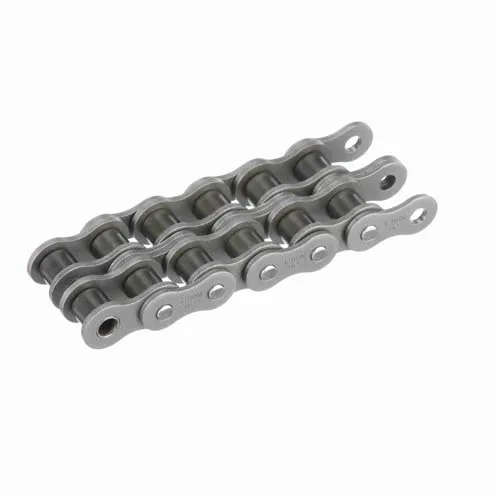
What are the considerations for selecting a low-maintenance conveyor chain?
When selecting a low-maintenance conveyor chain, several considerations should be taken into account:
1. Material Selection:
– Choose a conveyor chain made from materials that are resistant to wear, corrosion, and contamination. Stainless steel, plastic, or self-lubricating chains are commonly used for their durability and low maintenance requirements.
2. Lubrication-Free Design:
– Look for conveyor chains that have a self-lubricating design or are pre-lubricated with materials that reduce friction and eliminate the need for additional lubrication. This helps to minimize maintenance tasks associated with regular lubrication.
3. Sealed Construction:
– Consider conveyor chains with sealed construction to prevent the ingress of dirt, debris, and moisture. Sealed chains require less frequent cleaning and maintenance, making them ideal for low-maintenance applications.
4. Easy Cleaning:
– Opt for conveyor chains that are designed for easy cleaning. Smooth surfaces, open structures, and accessible components allow for quick and efficient cleaning, reducing maintenance time and effort.
5. Resistance to Contamination:
– Select a conveyor chain that is resistant to contamination. This includes resistance to chemicals, oils, greases, and other substances commonly found in the application environment. Chains that can withstand contamination require less frequent cleaning and maintenance.
6. Wear Monitoring:
– Look for conveyor chains that have wear monitoring features, such as wear indicators or sensors. These features help to identify chain wear and provide timely maintenance alerts, allowing for proactive replacement or adjustment.
7. Manufacturer Support:
– Consider the support provided by the chain manufacturer. A reputable manufacturer will offer guidance on maintenance intervals, replacement schedules, and provide technical assistance to ensure the proper functioning of the chain.
By considering these factors, you can select a low-maintenance conveyor chain that minimizes the need for frequent inspections, lubrication, cleaning, and replacement, resulting in reduced maintenance efforts and costs.
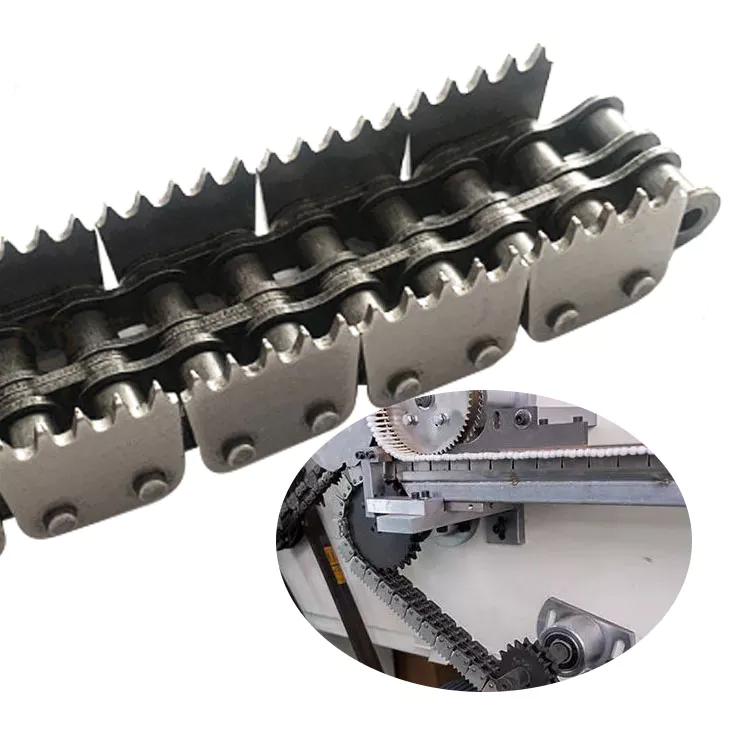
What are the different attachment options available for a conveyor chain?
Conveyor chains can be equipped with various types of attachments or accessories to accommodate specific material handling needs. Here are some common attachment options:
1. Cleats or Flights: Cleats or flights are raised sections attached to the conveyor chain to prevent materials from slipping or sliding off the chain. They are commonly used in incline or decline applications or when handling loose or bulk materials.
2. Side Plates or Side Guards: Side plates or side guards are installed along the edges of the conveyor chain to provide containment and prevent materials from spilling or falling off the sides. They are particularly useful when conveying small or irregularly shaped items.
3. Pusher Bars: Pusher bars are extensions mounted on the conveyor chain that can be pneumatically or mechanically actuated to push materials onto a different conveyor line or divert them to a specific location. They are often used for sorting or diverting applications.
4. Hold-Downs or Brackets: Hold-downs or brackets are devices attached to the conveyor chain to secure and stabilize the transported materials. They ensure that the materials remain in a fixed position during the conveying process, especially when encountering vibrations or changes in speed.
5. Guide Rails: Guide rails are installed alongside the conveyor chain to provide guidance and alignment for the materials being conveyed. They help maintain the desired path and prevent lateral movement or misalignment.
6. Magnetic Attachments: Magnetic attachments are used when handling ferrous materials. They allow the conveyor chain to attract and hold magnetic objects, ensuring effective transport and separation.
7. Tooling Plates: Tooling plates are platforms or mounting surfaces attached to the conveyor chain to accommodate specific equipment, such as fixtures, sensors, or robotic arms. They provide a convenient and customizable interface for integrating additional functionalities into the conveyor system.
8. Diverters or Transfer Units: Diverters or transfer units are specialized attachments that enable the seamless transfer of materials from one conveyor line to another, or between different processing stations. They ensure smooth transitions and precise material flow control.
These attachment options offer flexibility and versatility in conveyor chain applications, allowing customization based on the specific requirements of the material being transported or the production process. By selecting the appropriate attachments, conveyor chains can effectively handle a wide range of materials and optimize material flow within a conveyor system.

What are the different types of conveyor chains?
There are several types of conveyor chains available, each designed to meet specific application requirements. Here are some common types of conveyor chains:
- Roller chains: Roller chains are the most commonly used type of conveyor chain. They consist of a series of cylindrical rollers connected by side plates. Roller chains provide smooth and efficient movement and are suitable for medium to heavy-duty applications.
- Double pitch chains: Double pitch chains have larger pitch (distance between the centers of adjacent pins) compared to standard roller chains. They are often used in applications that require slower speeds and lighter loads.
- Hollow pin chains: Hollow pin chains have hollow pins that allow for easy attachment of various accessories or attachments. They are commonly used in conveying applications that require customization or where attachments need to be mounted.
- Apron or slat chains: Apron or slat chains consist of plates or slats that are connected by hinges. They are used in heavy-duty applications where the chain needs to support and carry large loads or withstand harsh environments.
- Plastic chains: Plastic chains are made of durable and lightweight materials such as acetal or polyethylene. They offer benefits such as corrosion resistance, low noise levels, and the ability to work in wet or washdown environments. Plastic chains are commonly used in food processing, packaging, and pharmaceutical industries.
These are just a few examples of conveyor chain types, and there are many other variations available depending on specific application requirements. The selection of the appropriate conveyor chain type depends on factors such as load capacity, speed, environment, and desired functionality.


editor by CX 2024-05-02