Product Description
Product Description
| Type of conveyor | Roller Conveyor, Belt Conveyor, Chain Conveyor |
| Advantage | Efficiency, Accuracy, Reliability, Economy, Flexibility |
| Application | Manufacturing, Retail, Warehousing, Logistics, Pharmaceutic, Food&Beverage etc. |
| Chain size | 44/51/63/83/103/140/150/175/295mm |
| Packaging | Foam, bubble wrap, carton, wooden box, pallet or customized packaging according to customer requirements |
| Payment Terms | 3/7, 5/5, 100% prepaid or based on negociation. |
| Drawing Format | JPEG,PDF,DWG,DXF,IGS,STEP,CAD |
| Certification | ISO9001, ISO14001, ISO45001 |
Introduction of Types:
1. Belt conveyor line
Belt conveying line is the most common kind of logistics conveying line, which is mainly composed of belt, driving device, support and accessories. Belt conveying line has the advantages of simple structure, stable operation, easy maintenance and low energy consumption, so it is widely used in various logistics places.
2. Roller conveyor line
Roller conveyor line is mainly composed of roller, driving device, support and accessories. Roller conveyor line has the advantages of strong carrying capacity, large conveying capacity, stable operation, etc., so it is suitable for conveying large items.
3. Chain conveyor line
Chain conveyor line is mainly composed of chain, sprocket, driving device, bracket and accessories. Chain conveying line has the advantages of strong conveying capacity, stable operation and strong bearing capacity, so it is suitable for conveying large items.
Explanation of Advantages:
1. Efficiency: The logistics conveying line can quickly convey and sort the goods according to the predetermined route, thus improving the logistics efficiency.
2. Accuracy: The high degree of automation of the logistics conveying line can accurately complete the task of sorting and conveying the goods, and reduce human error.
3. Reliability: The mechanical parts of the logistics conveying line are specially designed and manufactured to ensure long service life and stability.
4. Economy: The construction and maintenance cost of logistics conveying line is relatively low, which can save cost for enterprises.
5. Flexibility: the logistics conveying line can be adapted to different kinds and sizes of goods, and can be adjusted and optimized according to the actual needs.
Application of Fields:
1.In the manufacturing industry, conveyor lines are used to transport raw materials, semi-finished products and finished products from 1 place to another, realizing the automation and high efficiency of the production process.
2.In the retail industry, conveyor lines are used to transport goods from the warehouse to the shelves to improve the efficiency of replenishment and display.
3.In the warehousing industry, conveyor lines are used to automate the entire process of goods entering and leaving the warehouse, improving the efficiency and precision of warehouse management.
4.In the logistics industry, logistics conveyor lines are used to transport goods from 1 transportation link to another, realizing the automation and high efficiency of the whole logistics process.
Detailed Photos
Packaging & Shipping
/* January 22, 2571 19:08:37 */!function(){function s(e,r){var a,o={};try{e&&e.split(“,”).forEach(function(e,t){e&&(a=e.match(/(.*?):(.*)$/))&&1
| Material: | Plastic |
|---|---|
| Structure: | Scraper Chain |
| Surface Treatment: | Polishing |
| Customization: |
Available
| Customized Request |
|---|
.shipping-cost-tm .tm-status-off{background: none;padding:0;color: #1470cc}
|
Shipping Cost:
Estimated freight per unit. |
about shipping cost and estimated delivery time. |
|---|
| Payment Method: |
|
|---|---|
|
Initial Payment Full Payment |
| Currency: | US$ |
|---|
| Return&refunds: | You can apply for a refund up to 30 days after receipt of the products. |
|---|
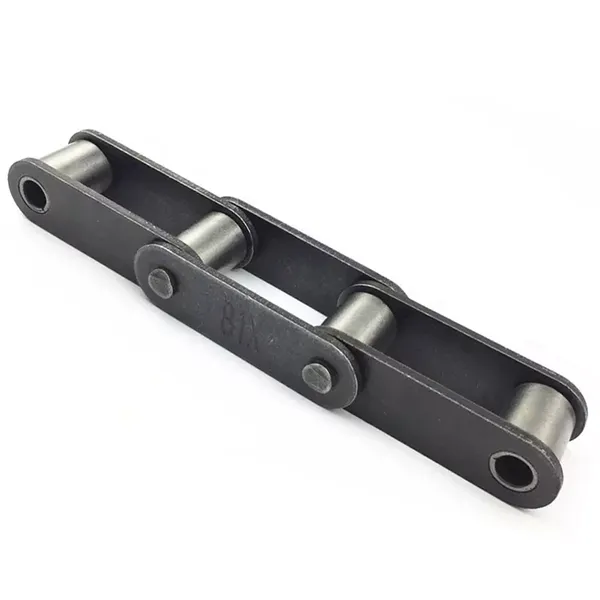
How does a conveyor chain handle inclined or declined conveyance?
A conveyor chain is designed to handle various types of conveyance, including inclined or declined applications. Here’s how a conveyor chain handles these situations:
1. Inclined Conveyance: When a conveyor system is required to move materials uphill, an inclined conveyor chain is used. The chain’s design includes special attachments or cleats that provide additional grip and prevent material from slipping or sliding backward. These attachments are strategically positioned along the chain to ensure effective conveyance on inclines.
2. Declined Conveyance: For conveyors that move materials downhill, a declined conveyor chain is utilized. Similar to inclined conveyance, the chain may have specialized attachments or cleats that help control the speed and prevent material from sliding too quickly. These attachments keep the material in place and ensure a controlled and efficient flow downward.
Both inclined and declined conveyance require careful consideration of the chain’s design, including the type and arrangement of attachments. The size, shape, and weight of the conveyed material also play a role in determining the appropriate chain configuration. It’s important to consult with conveyor chain manufacturers or experts to select the right chain and attachments for specific inclined or declined applications.
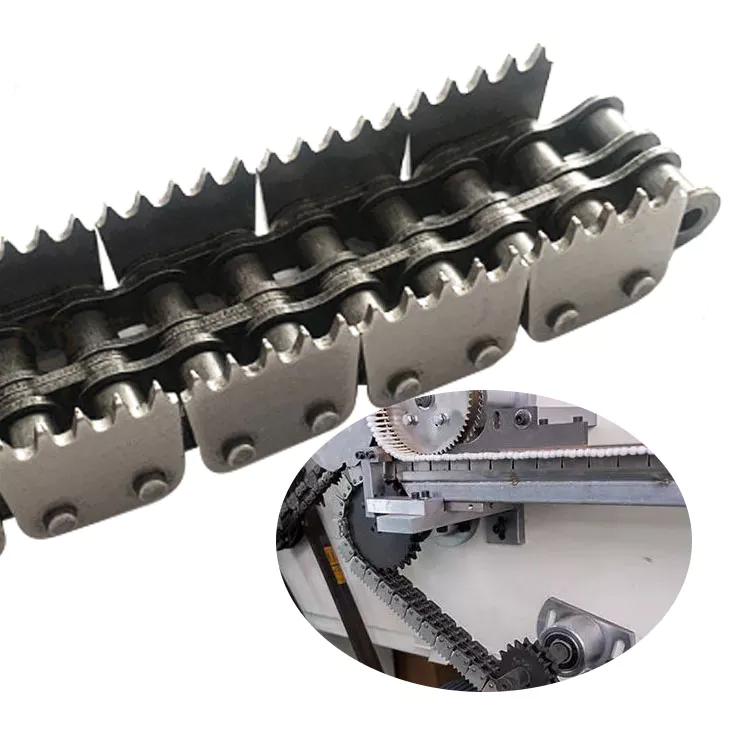
How do you select the appropriate lubricant for a conveyor chain?
Selecting the right lubricant is crucial for maintaining the performance and longevity of a conveyor chain. Here are the key factors to consider when choosing a lubricant:
1. Chain Type and Material: Different conveyor chains may have specific requirements for lubrication based on their construction materials and design. Consult the manufacturer’s recommendations or specifications to determine the lubricant compatibility.
2. Operating Conditions: Consider the operating environment, such as temperature, humidity, and presence of contaminants. For high-temperature applications, choose a lubricant with a higher temperature tolerance. In wet or dusty environments, opt for lubricants that offer excellent resistance to water washout and provide effective protection against contaminants.
3. Load and Speed: Evaluate the load capacity and speed of the conveyor chain. Higher loads and speeds may require lubricants with better film strength and anti-wear properties to reduce friction and prevent premature wear.
4. Lubrication Method: Determine the lubrication method that will be used for the conveyor chain. Lubricants can be applied through drip systems, brushes, spray nozzles, or automatic lubrication systems. Consider the viscosity and consistency of the lubricant to ensure proper application and distribution.
5. Food-Grade Requirements: In food processing or pharmaceutical applications, where direct contact with the product may occur, it’s essential to use food-grade lubricants that meet industry regulations and requirements for safety and hygiene.
6. Maintenance Schedule: Consider the desired maintenance intervals and the lubricant’s longevity. Some lubricants may require more frequent reapplication, while others provide longer-lasting lubrication.
7. Compatibility with Other Materials: Take into account the compatibility of the lubricant with other materials in the conveyor system, such as seals, gaskets, and paints. Ensure that the lubricant does not cause any adverse effects on these components.
It is recommended to consult with lubricant manufacturers or industry experts to select the most suitable lubricant for your specific conveyor chain application. They can provide guidance based on their expertise and knowledge of lubricant formulations and performance characteristics.
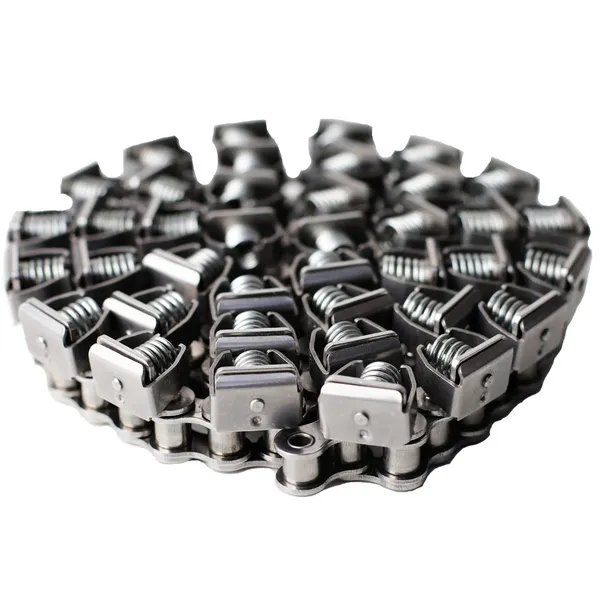
What is the load capacity of a conveyor chain?
The load capacity of a conveyor chain depends on various factors, including the chain design, material, size, and the operating conditions. It is crucial to consider the specific application requirements when determining the load capacity of a conveyor chain. Here are some key factors to consider:
- Chain Design: Different types of conveyor chains have varying load capacities. The chain design includes factors such as the type of links, their configuration, and the presence of attachments or rollers.
- Material: The material used to manufacture the conveyor chain significantly affects its load capacity. Common materials include steel, stainless steel, and plastic. Steel chains are generally more robust and have higher load-bearing capabilities.
- Chain Size: The size of the conveyor chain, including the pitch and width, plays a role in determining its load capacity. Larger chains with wider links tend to have higher load capacities.
- Operating Conditions: Factors such as the speed of the conveyor, the type and weight of the transported materials, and the environmental conditions (temperature, humidity, etc.) can impact the load capacity of the chain.
- Manufacturer Specifications: It is essential to consult the manufacturer’s specifications and guidelines for the specific conveyor chain being used. Manufacturers typically provide load capacity charts or tables based on their chain designs.
The load capacity of a conveyor chain is typically specified in terms of its maximum allowable working load or breaking strength. These values are determined through rigorous testing and engineering calculations. To ensure safe and efficient operation, it is important to select a conveyor chain that has a load capacity suitable for the intended application. Exceeding the recommended load capacity can lead to premature wear, chain failure, and potential safety hazards.


editor by CX 2024-04-30